Jordan Schröder · 25 October 2026
Shipwreck Explorations Serving as Educational Tools for Visitors at Coastal Performance Sites
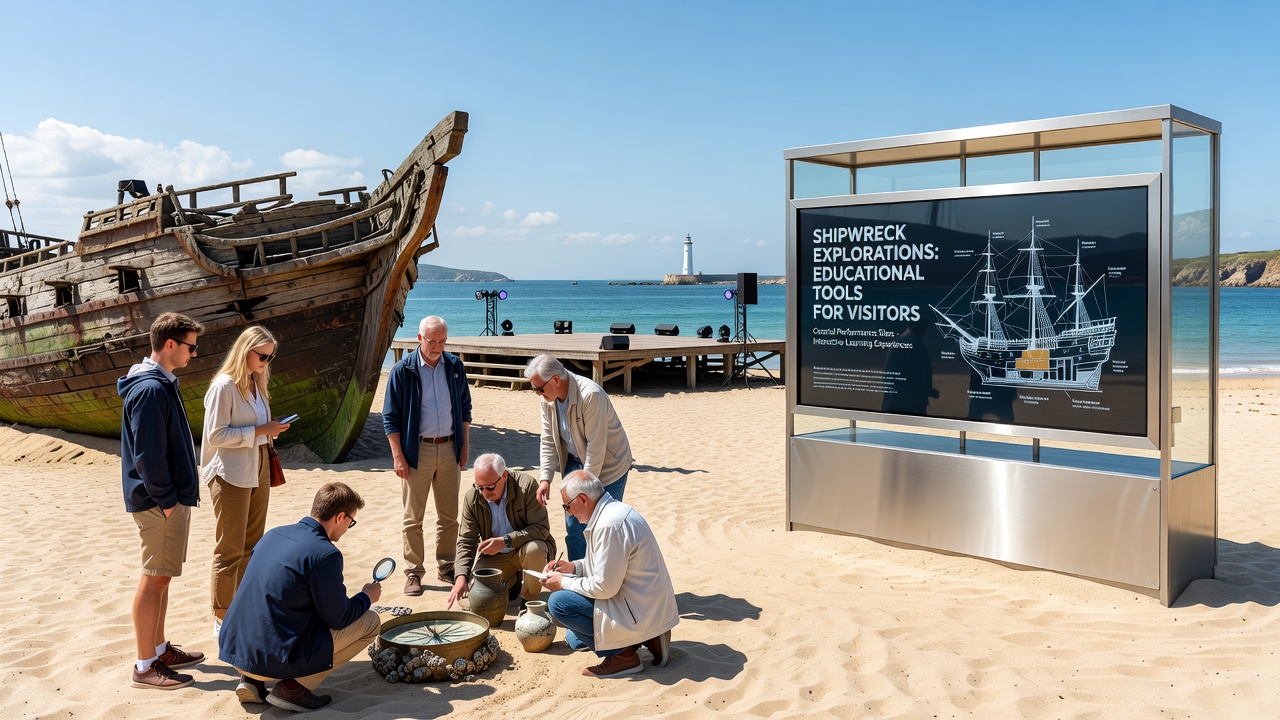
Coastal performance sites often sit near historical maritime routes where shipwrecks remain preserved on the seafloor, and operators have integrated guided explorations into visitor programs to deliver structured learning about marine history and ecology. These programs combine on-site lectures at amphitheaters with boat or diving excursions that let participants examine artifacts and habitats directly, creating measurable connections between performance schedules and underwater fieldwork.
Integration of Maritime Archaeology at Venue Locations
Performance venues along shorelines in regions such as the Pacific Northwest and Mediterranean coasts schedule sessions where archaeologists present findings from nearby wrecks during intermissions or pre-show talks, and data collected by marine institutes shows increased retention of historical facts among attendees who complete both the talk and the exploration component. Researchers at institutions including the University of British Columbia have documented how these combined activities improve understanding of trade routes and vessel construction techniques from the 18th and 19th centuries.
Venues maintain partnerships with local maritime authorities to ensure safe access, while October 2026 marks the launch of an expanded curriculum at several sites that adds virtual reality reconstructions of wreck interiors for visitors unable to enter the water. The curriculum draws on bathymetric surveys conducted by government agencies and includes modules on sediment layers that preserve organic materials such as wooden hulls and cargo.
Visitor Learning Outcomes and Program Structure
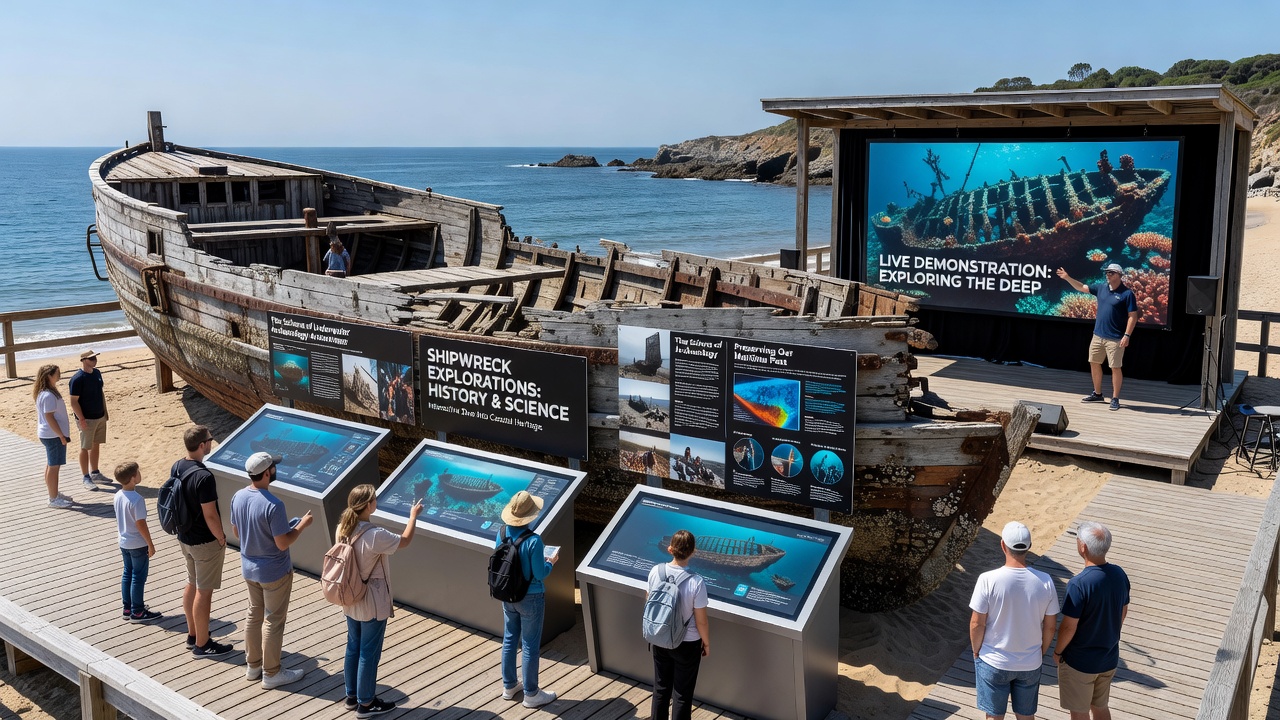
Programs typically begin with an orientation at the performance site that covers safety protocols and historical context, then transition to small-group boat trips equipped with sonar displays and underwater cameras. Participants observe species that colonize wreck structures and record measurements of corrosion rates, activities that align with curriculum standards used by coastal school districts.
Studies conducted by the Australian Maritime Safety Authority indicate that repeated visits correlate with higher scores on post-program assessments covering topics like ballast stone origins and cargo manifests. Venues rotate exploration schedules around tidal patterns to minimize environmental disturbance, and operators track participation numbers through ticketing systems that separate performance-only tickets from combined education packages.
Equipment and Safety Measures Employed
Exploration teams deploy remotely operated vehicles for deeper sites where diver access is restricted, and these vehicles transmit live footage to screens at the performance venue so larger audiences can follow the survey in real time. Safety briefings reference guidelines from Transport Canada and the European Maritime Safety Agency, which specify equipment checklists and emergency ascent procedures for mixed groups of performers, staff, and visitors.
Training for guides includes certification in underwater archaeology techniques and first-aid protocols specific to marine environments, while venues maintain logs of weather conditions and participant health declarations to comply with insurance requirements. Data logs from past seasons show that sites using these layered safety systems report fewer interruptions during scheduled explorations.
Case Examples from Multiple Regions
One performance site near the Strait of Georgia coordinates with Parks Canada archaeologists to examine a 19th-century trading vessel whose cargo included preserved ceramics that illustrate regional exchange networks. Visitors compare recovered fragments with replicas displayed in the venue lobby, and the comparison exercise forms part of an interactive worksheet distributed before each trip.
Another location on the southern coast of Australia runs sessions focused on 20th-century steamship remains where participants measure encrustation thickness as an indicator of water temperature changes over decades. Records maintained by the site operators show consistent attendance from university field courses that incorporate the data into student research projects on climate variability in shelf seas.
Conclusion
Shipwreck explorations at coastal performance sites deliver documented educational value through structured integration of maritime archaeology, ecological observation, and historical analysis. Programs continue to expand with new technology and regional partnerships, and October 2026 introduces additional virtual components that extend access while maintaining the core focus on direct site engagement. Participation data and academic collaborations provide ongoing metrics for evaluating effectiveness across different geographic settings.